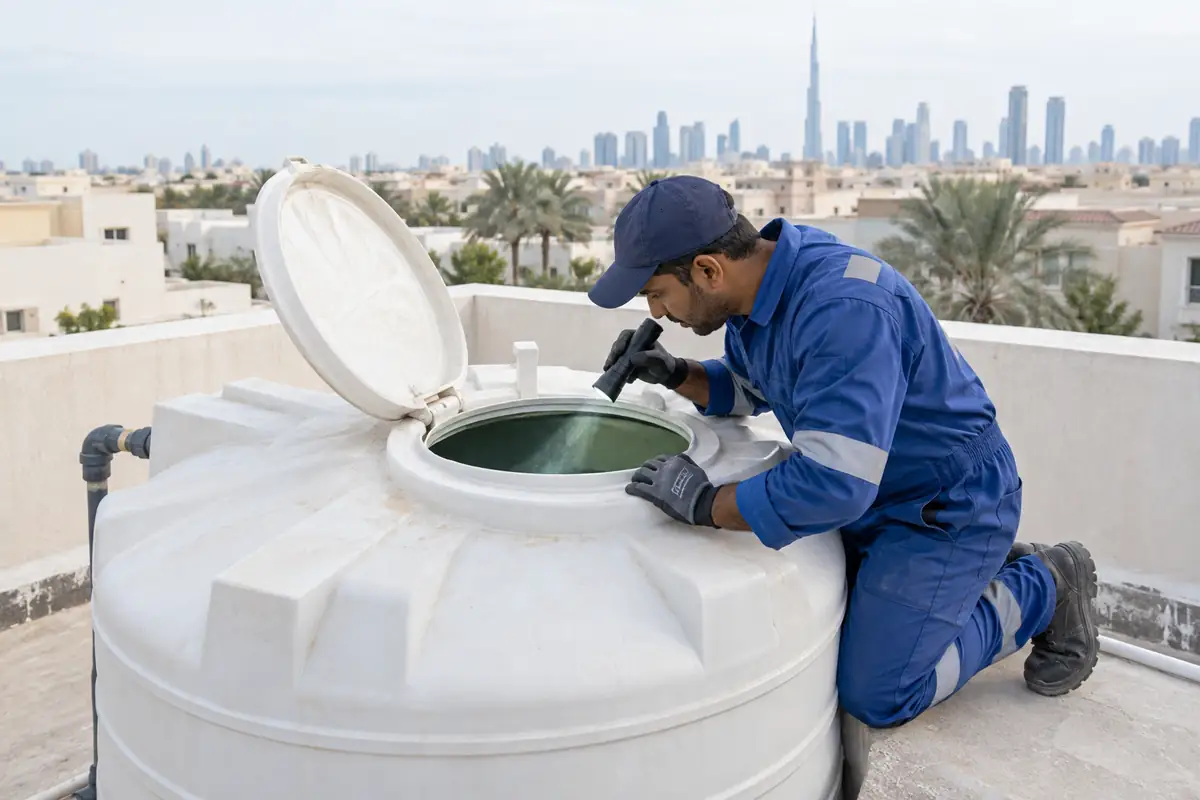


Water tank cleaning helps remove this material from inside the tank. It also gives you a chance to keep track of the tank’s visible condition as part of routine maintenance.
The main benefit is better tank cleanliness. Cleaning does not, by itself, guarantee that water is safe to drink or solve every water quality problem.
What Are the Main Benefits of Water Tank Cleaning?
Water tank cleaning can help
- Remove sediment and debris
- Clean internal tank surfaces
- Reduce visible buildup
- Make some tank condition problems easier to notice
- Support routine water tank maintenance
- Address some appearance or odor concerns when the tank is contributing to them
Cleaning has a clear purpose: remove unwanted material from the tank and improve its physical cleanliness.
It does not replace water testing, disinfection, tank repair, or plumbing repair when those are needed.
Removing Sediment and Debris
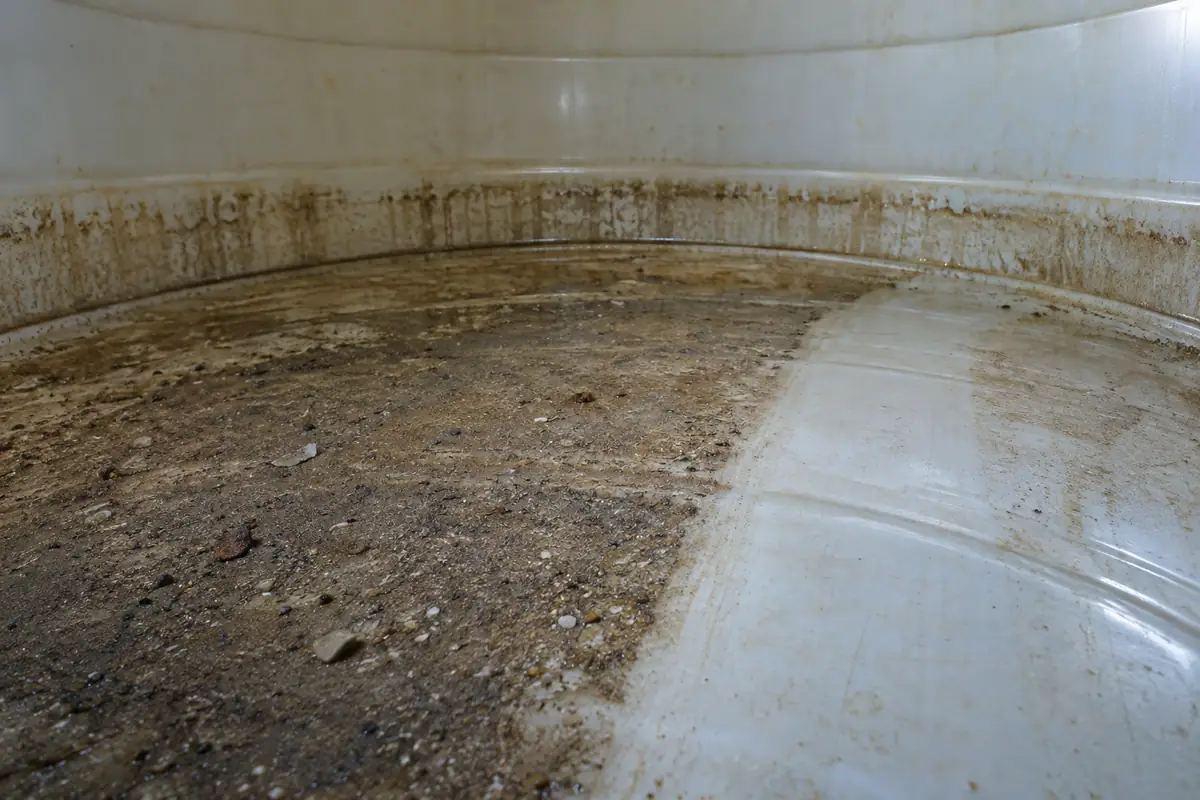
One of the clearest benefits of water tank cleaning is the removal of material that has collected inside the tank.
This may include:
- Settled sediment
- Loose debris
- Visible deposits
- Buildup on internal surfaces
Material can settle at the bottom or collect on other accessible parts of the tank. Cleaning removes this buildup instead of allowing it to remain inside the stored water system.
Cleaning Internal Tank Surfaces
Water tank cleaning also focuses on the surfaces inside the tank.
Removing visible dirt and deposits helps improve the physical condition of the tank interior from a cleanliness standpoint.
This matters because the tank is part of the system used to store water before it reaches fixtures in the property.
However, a cleaner tank does not automatically mean that every aspect of water quality has been confirmed.
Making Visible Tank Problems Easier to Notice
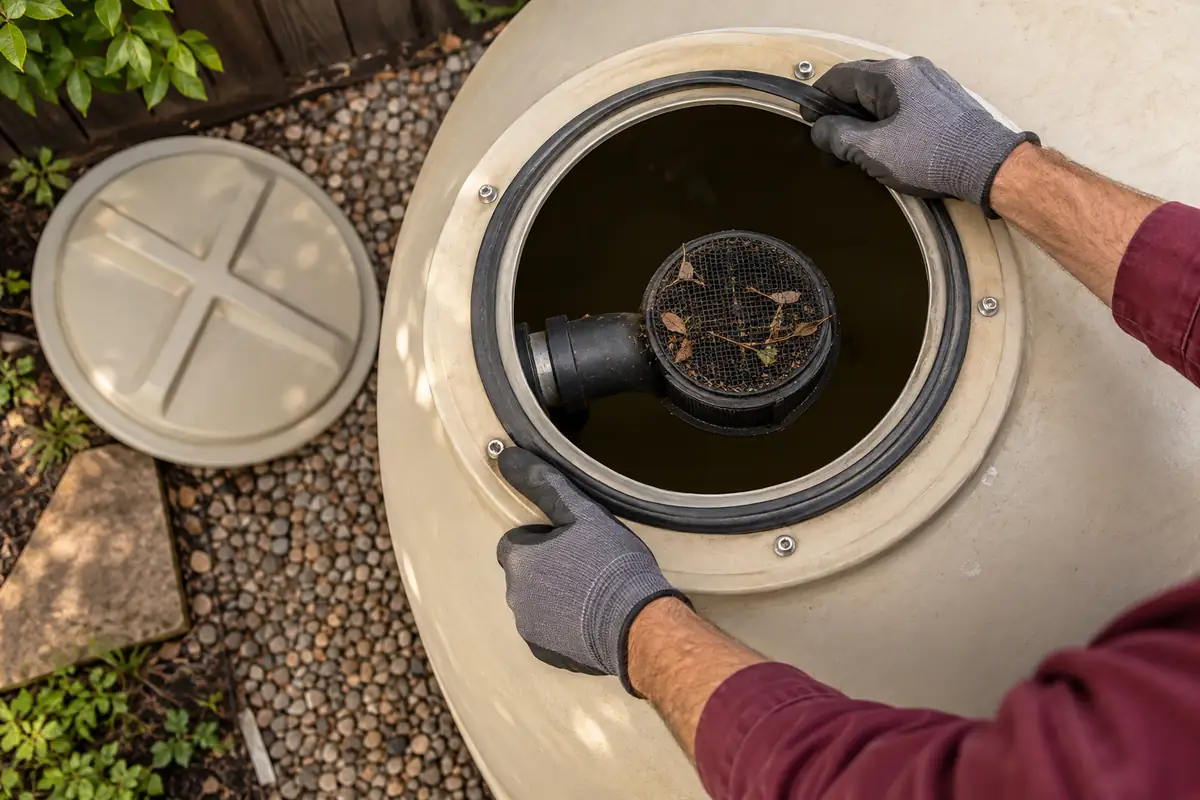
Cleaning can make some condition problems easier to see. Depending on the tank, visible concerns may include
- A damaged cover
- Cracks
- Damaged internal surfaces
- Corrosion where applicable
- Openings that allow debris to enter
- Other visible signs of wear or damage
Cleaning does not repair these problems.
Its benefit is that a cleaner tank may make certain visible issues easier to identify so the correct next step can be considered.
A separate water tank inspection may be needed when the tank's condition itself is the main concern.
Can Cleaning Help With Water Appearance or Odor?
Some tank problems first become noticeable through a change in the stored water.
You may notice:
- Visible particles
- Unusual discoloration
- A recurring odor
Water tank cleaning may help when sediment, debris, or buildup inside the tank contribute to the problem.
However, these symptoms do not always start in the tank.
They may also involve:
- Incoming water
- Plumbing
- Pipes
- Fixtures
- Tank damage
- Other parts of the water system
For this reason, cleaning should not be treated as a guaranteed fix for every water appearance or odor concern.
How Does Cleaning Support Routine Water Tank Care?
Cleaning can form one part of broader water tank care. Routine attention may include checking:
- Tank cleanliness
- Visible internal surfaces
- Cover condition
- Inlet and outlet areas
- Signs of damage
- Recurring buildup
- Previous cleaning history
Keeping track of these details can make it easier to understand how the tank's condition changes over time.
Cleaning cannot prevent every future problem, but it helps deal with the buildup that is already present.
Does Water Tank Cleaning Improve Water Quality?
Water tank cleaning can improve the cleanliness of the tank itself by removing sediment, debris, and buildup.
This may help when the material inside the tank is affecting the stored water. However, overall water quality can depend on more than just the tank.
Other factors may include:
- Incoming water supply
- Pipes
- Plumbing condition
- Tank condition
- Storage conditions
- Other parts of the water system
This means:
A clean tank does not automatically prove that the water is safe to drink.
If water quality itself needs to be confirmed, cleaning is not a substitute for appropriate water quality assessment or testing.
Is Water Tank Cleaning the Same as Disinfection?
No. Water tank cleaning and water tank disinfection have different purposes.
Cleaning focuses on removing physical materials such as:
- Sediment
- Dirt
- Debris
- Visible buildup
Disinfection is a distinct process; it is not just another term for basic tank cleaning.
Depending on the tank's condition, a property may need cleaning, disinfection, inspection, repair, or multiple types of care.
What Water Tank Cleaning Cannot Fix
Water tank cleaning has limits.
Cleaning alone does not repair
- Cracks
- Damaged covers
- Broken tank parts
- Plumbing faults
- Pipe leaks
- Problems with the incoming water supply
It also cannot automatically guarantee:
- Drinking-water safety
- Removal of every possible contaminant
- A specific disinfectant level
- Permanent prevention of future buildup
- Correction of every odor or discoloration problem
Knowing these limits helps prevent the wrong service from being used for the wrong problem.
When May a Water Tank Need Cleaning?
A water tank may need cleaning when its condition or maintenance history shows that sediment, debris, or buildup needs attention.
Cleaning may be more relevant when:
- Sediment is visible
- Debris has collected
- Internal areas appear dirty
- Previous cleaning history is unclear
- Inspection shows buildup that should be removed
The decision should be based on the condition of the tank rather than assuming that every tank is in the same state.
How Often Should a Water Tank Be Cleaned?
There is no single schedule that fits every water tank.
Timing may depend on:
- Tank condition
- Visible buildup
- Previous cleaning history
- Tank use
- Property or building guidance
- Relevant local requirements where applicable
If specific current guidance applies to the building or tank, that guidance should be followed.
A tank with visible buildup or another clear problem may also need attention before its normally planned cleaning date.
What Signs May Mean a Water Tank Needs Attention?
Possible signs include:
- Visible sediment
- Debris
- Unusual water appearance
- A recurring odor
- Visible dirt
- An unknown cleaning history
- A loose or damaged tank cover
These signs do not prove that cleaning is always the only solution.
The tank may instead need inspection, disinfection, repair, or another type of water system attention.
Can You Clean a Water Tank Yourself?
Basic observation is different from full water tank cleaning.
You may be able to note visible issues such as:
- External damage
- Cover condition
- Visible debris
- Changes in water appearance
- Previous cleaning records
Full cleaning may involve safe access, water removal, equipment, internal surfaces, and other technical steps.
Avoid entering a tank or using cleaning or disinfection chemicals without the correct equipment, processes, and skills.
When Should Professional Water Tank Cleaning Be Considered?
Professional cleaning may be worth considering when:
- Visible sediment or debris is present
- Buildup can be seen
- The previous cleaning history is unknown
- Water concerns appear linked to the tank
- Safe tank access requires equipment
- You are unsure whether cleaning, inspection, or disinfection is needed
If the main concern is physical damage to the tank, cleaning alone may not solve the problem.
Frequently Asked Questions
What are the benefits of water tank cleaning?
Water tank cleaning helps remove sediment, debris, and buildup. It also improves the physical cleanliness of internal tank surfaces and can make some visible tank problems easier to notice.
Can water tank cleaning improve stored water appearance?
It can help when sediment, debris, or buildup inside the tank is affecting the stored water. However, overall water quality also depends on the incoming supply, pipes, tank condition, and other parts of the system.
Does water tank cleaning prove that water is safe to drink?
Cleaning alone does not prove that water is safe to drink. Water safety may require separate assessment, testing, or treatment depending on the situation.
Is water tank cleaning the same as disinfection?
No. Cleaning removes physical dirt, sediment, debris, and buildup. Disinfection is a separate treatment process.
How often should a water tank be cleaned?
There is no one interval that fits every tank. Timing can depend on tank condition, visible buildup, previous cleaning history, property guidance, and relevant requirements.
What signs may indicate that a water tank needs attention?
Visible sediment, debris, dirt, unusual water appearance, recurring odor, or an unknown cleaning history may suggest that the tank needs attention.
Can water tank cleaning repair a damaged tank?
No. Cleaning does not repair cracks, damaged covers, plumbing faults, or other physical problems.
Can I clean a water tank myself?
You can do basic external checks, but full tank cleaning is more complex. It requires access, water removal, tools, tight spaces, and specific cleaning steps. Avoid entering or treating the tank without the correct skills and equipment.
Does cleaning remove every possible contaminant?
No. Cleaning removes physical buildup from the tank. It should not be treated as proof that every possible contaminant has been removed.
When should professional water tank cleaning be considered?
Consider it when you see visible sediment or debris. Also, if the cleaning history is unclear or if you notice buildup. Additionally, if safe cleaning needs special equipment or professional access, it is time to call for help.
Need Help With Water Tank Cleaning?
If your Dubai property has visible sediment, debris, or an unknown tank-cleaning history, let RapidixHome know. Please share the property type, the Dubai area, and the tank type if you know it. Also, include any issues you have noticed.
This information can help us determine if you need water tank cleaning, inspection, disinfection, or another service.