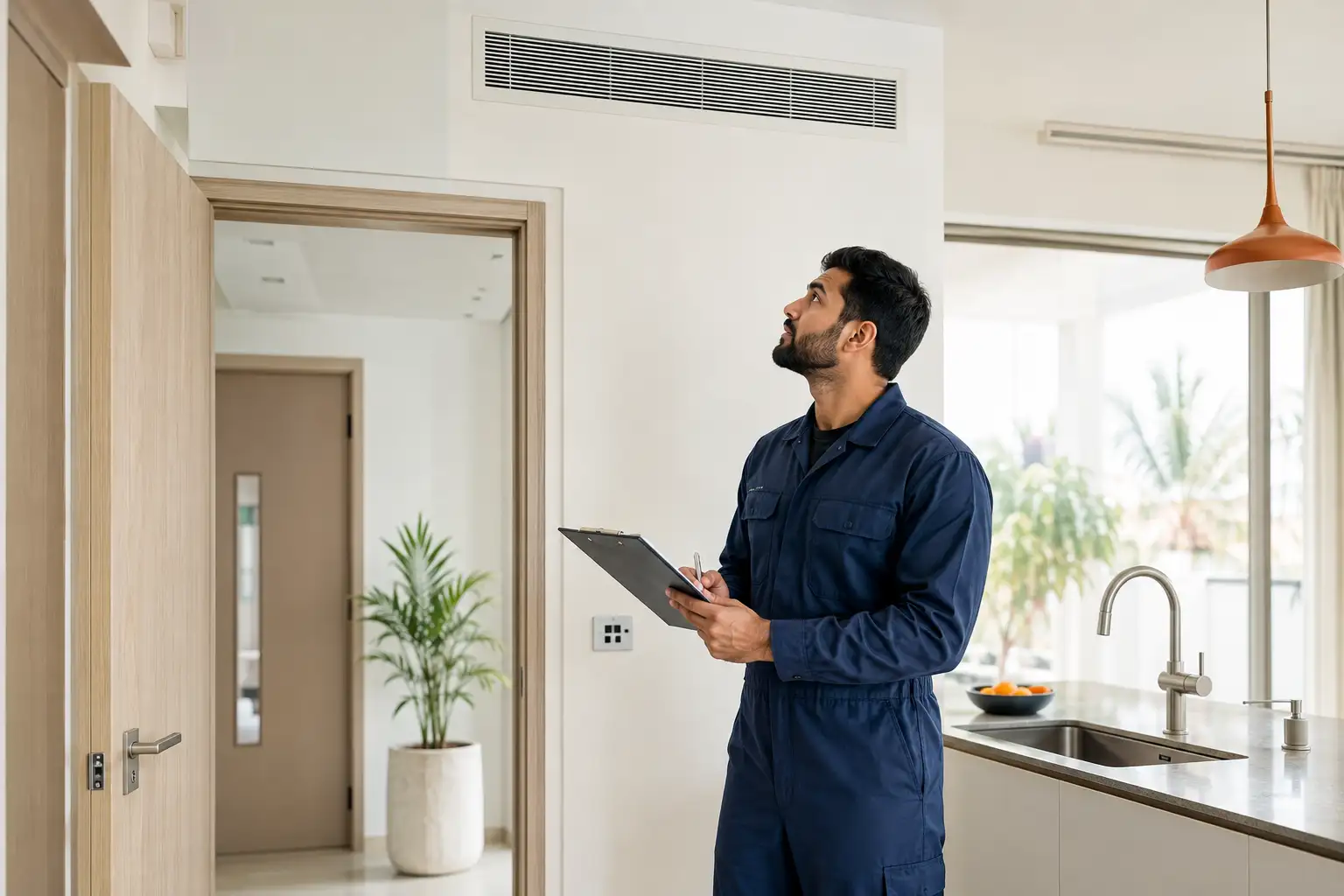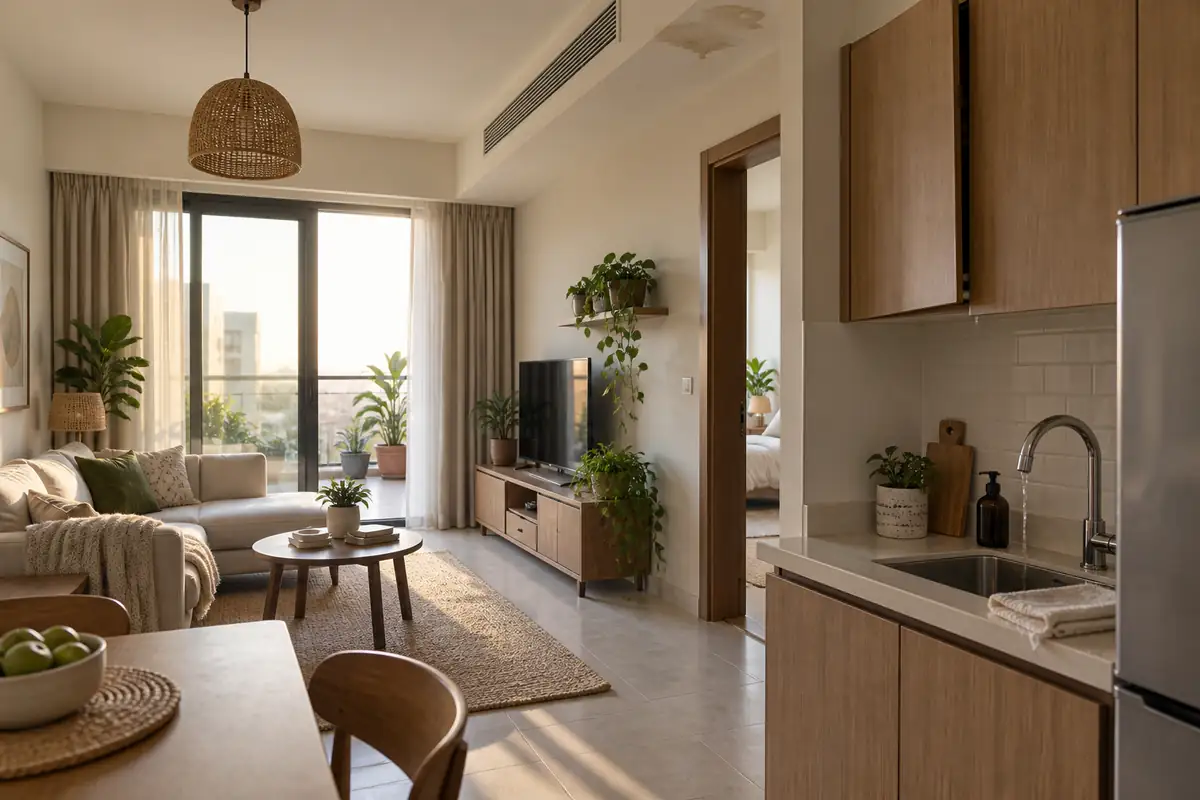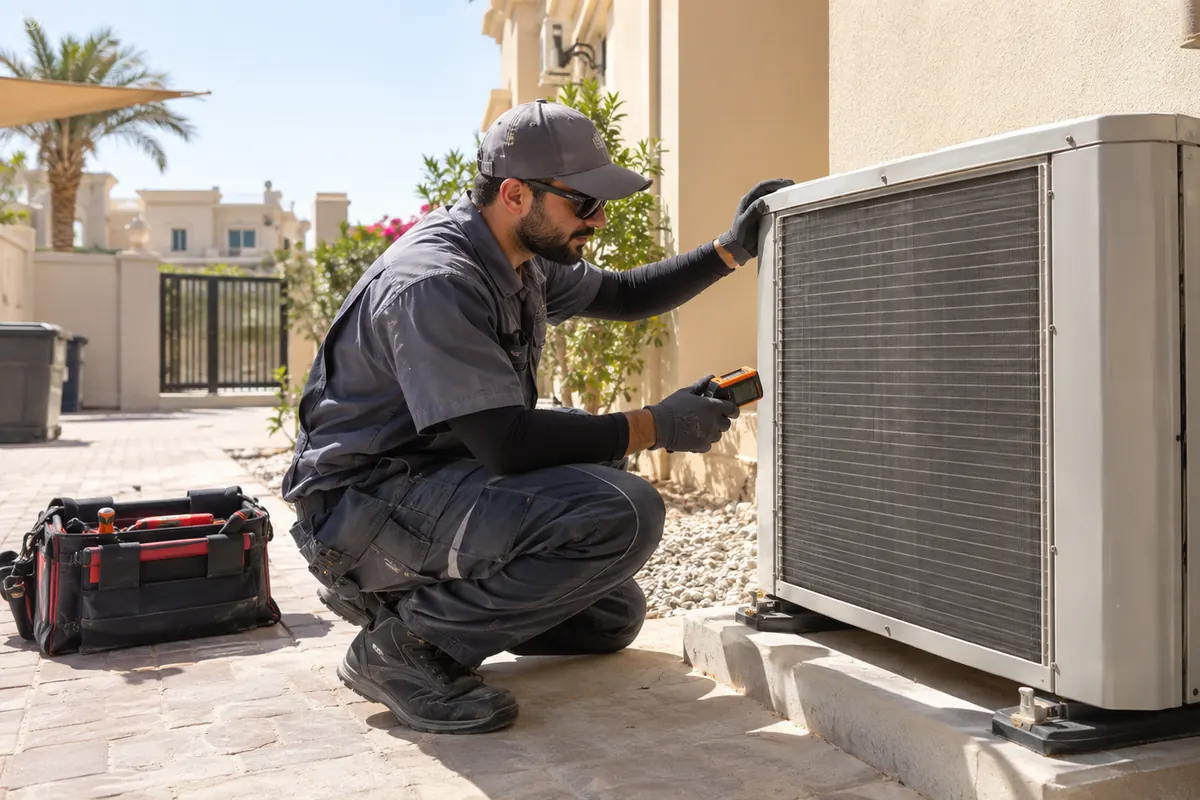


A summer home maintenance checklist helps you target areas that need extra care before and during the hotter months.
The goal isn't to inspect every part in detail. Instead, you want to spot changes early and address warning signs before they become bigger problems.
Quick Dubai Summer Home Maintenance Checklist
Before and during summer, check:
- AC cooling performance
- Airflow from visible vents
- AC water leaks or damp marks
- Unusual AC sounds or smells
- Visible plumbing leaks
- Water pressure changes
- Electrical warning signs
- Moisture or humidity-related changes
- Water tank condition where relevant
- Pool condition where applicable
- Doors and windows
- Balconies and outdoor fittings
- Visible waterproofing concerns
- Areas affected after dust or sand storms
- Known problems before summer travel
- Problems that keep returning
The key question is:
What has changed compared with normal operation?
1. Check Your AC Before Heavy Summer Use
Cooling deserves a high priority during the Dubai summer.
Watch for:
- Weaker cooling than usual
- Rooms take longer to cool
- Uneven cooling between rooms
- The AC stopped unexpectedly
- Unusual sounds
- Unusual smells
- Breaker trips linked with AC usage
One symptom does not always identify the cause. However, a repeated change in cooling performance may require a professional AC assessment.
Do not wait for complete cooling failure before taking a recurring warning sign seriously.
2. Check Airflow and Visible Vents
Airflow changes can also show that something needs attention.
Look for:
- Noticeably weak airflow
- One room cools differently
- Visible dust around vents
- Blocked-looking vents
- Airflow that feels different from normal
Do not assume that weak airflow automatically means the ducts need cleaning. The cause may involve the AC system, filter condition, duct condition, or another issue.
The purpose of this check is to notice the change, not to diagnose it yourself.
3. Look for AC Water Leaks and Damp Marks
Water around an AC area should not be ignored.
Check for:
- Repeated dripping
- Water near indoor AC areas
- Damp wall marks
- Ceiling stains
- Moisture that appears when the AC runs
- A stain that keeps returning
A recurring leak may need an AC inspection. Do not open internal AC parts or attempt technical drainage work unless you are trained to do so.
4. Check Plumbing for Leaks and Water Changes
Summer maintenance should not focus only on cooling.
Check visible plumbing areas for:
- Dripping fixtures
- Leaks under sinks
- Wet cabinets
- Water marks
- Visible pipe leaks
- Noticeable water pressure changes
A small leak can continue unnoticed, especially if the home is busy or about to be left vacant. If water appears near electrical points, treat the situation with extra care.
5. Watch for Electrical Warning Signs
Heavy cooling use can make existing electrical problems easier to notice.
Look for:
- Repeated breaker trips
- Flickering lights
- Warm or discolored sockets
- Burning smells
- Buzzing or crackling
- Visible sparks
- A fault that appears when the AC or another large appliance is running
Do not try to diagnose wiring, voltage, or electrical load yourself. Repeated electrical warning signs need the appropriate electrical assessment.
6. Check for Moisture and Humidity Warning Signs
Look for changes such as:
- Damp patches
- Condensation
- Recurring stains
- Paint bubbling
- Musty odors
- Moisture around walls or ceilings
Do not assume humidity is always the cause.
Moisture may come from:
- Plumbing
- AC drainage
- Waterproofing failure
- Water ingress
- Another maintenance problem
The important step is to notice where the issue appears and whether it keeps returning.
7. Check Water Tank Condition Where Relevant
If your property has a water tank, check its visible condition where this can be done safely.
Look for:
- Visible dirt or sediment
- Debris
- A damaged or loose cover
- Changes in stored water appearance
- Recurring odor concerns
- A tank condition that has not been checked for some time
Do not judge water safety by appearance or odor alone. If the tank looks dirty, damaged, or poorly sealed, inspection or cleaning may be more relevant.
8. Check Pool Condition Where Applicable
For homes with a pool, summer can bring heavier use and more dust exposure.
Check for:
- Visible debris
- Changes in water appearance
- Dirt after dust events
- Circulation changes
- Visible equipment warning signs
- Problems that keep returning
A dirty pool does not always mean cleaning is the only issue. If circulation or equipment behavior has changed, maintenance or repair may be needed.
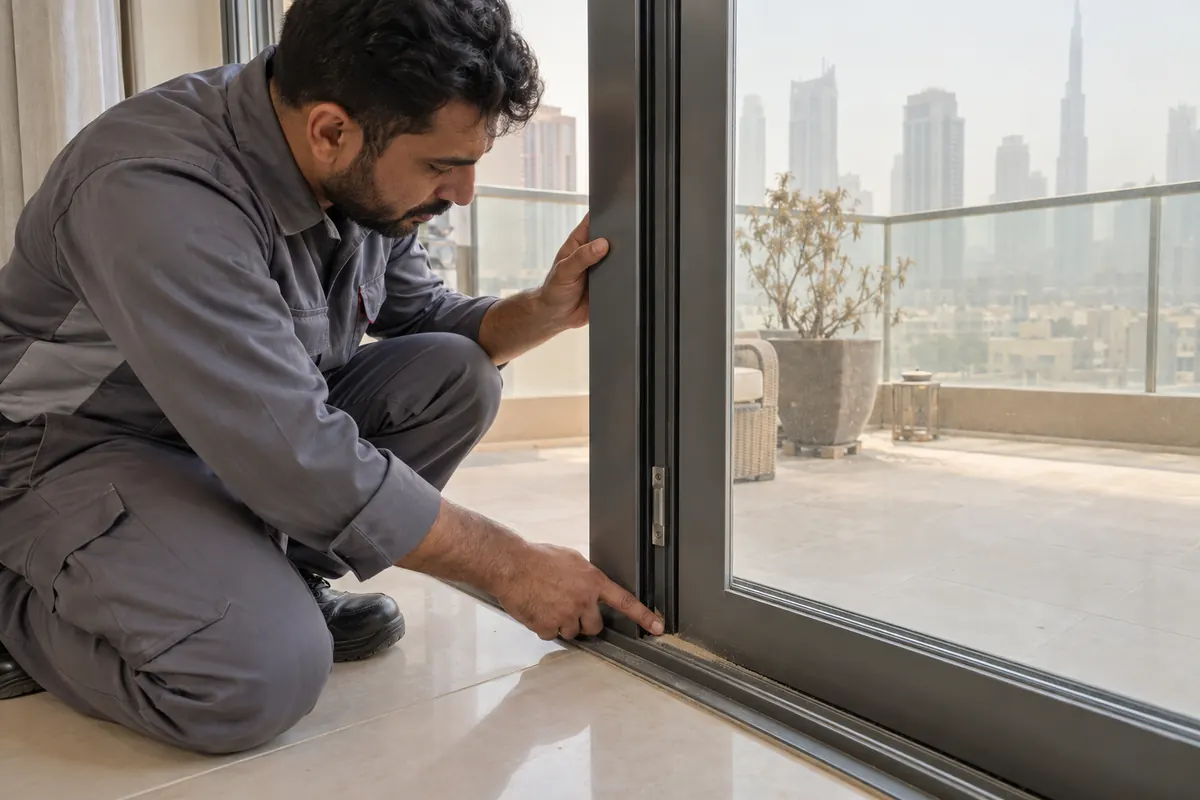
9. Check Doors, Windows, and Visible Fittings
Doors and windows should continue to open, close, and fit as expected.
Check for:
- Doors that no longer close properly
- Windows that do not shut correctly
- Loose handles or fittings
- Damaged visible seals
- Changes around frames
- New gaps
Keep the check simple and visual. A minor fitting issue may suit handyman work. A larger movement or damage problem may need another type of assessment.
10. Inspect Balconies and Outdoor Areas
Outdoor areas can collect dust and show wear during the summer.
Look for:
- Loose fittings
- Visible cracks
- Damaged outdoor fixtures
- Dust or debris buildup
- Blocked-looking drainage points
- Surface damage
- New watermarks
Do not assume that every outdoor crack is cosmetic. Recurring or worsening damage may need further assessment.
11. Look for Waterproofing Warning Signs
Where safely visible, look for:
- Damp marks
- Ceiling stains
- Visible cracks
- Water ingress
- Recurring moisture
- Damage around exposed surfaces
Do not paint over a stain and assume the problem is solved. Painting may cover the mark, but it does not stop a leak or waterproofing failure.
12. Check the Home After a Dust or Sandstorm
Dust events can reveal maintenance issues as well as create cleaning work.
After a significant dust or sandstorm, check:
- Visible AC vents
- Windows and doors
- Balcony areas
- Outdoor fittings
- Pool surfaces where applicable
- Outdoor equipment
- Areas where dust entered unexpectedly
Look for changes such as:
- Weak airflow
- Loose fittings
- Damaged seals
- Dust entering through gaps
- Outdoor items that have shifted or been damaged
The goal here is maintenance awareness, not deep cleaning.
13. Check Known Problems Before Summer Travel
If the property is vacant, deal with known issues before leaving.
Check for:
- Existing AC problems
- Active plumbing leaks
- Drain problems are already present
- Electrical warning signs
- Doors and windows that do not close properly
- Known dampness
- Outdoor fittings that need attention
- Repairs that are already overdue
Do not leave a known leak or electrical warning sign unresolved simply because the home will be empty.
Avoid relying on one fixed AC temperature rule for every property. The correct setting depends on the property and system.
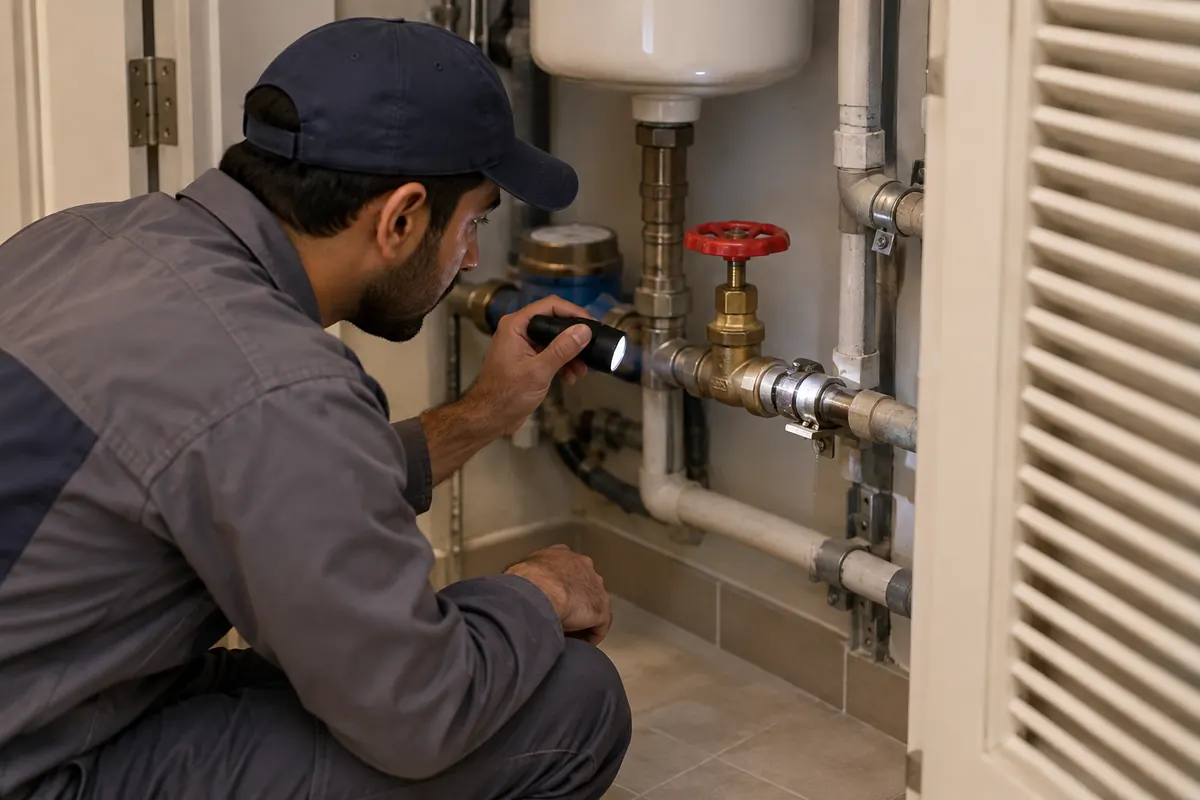
14. Check the Home Again After Returning
After a vacant period, look for changes.
Check for:
- Water leaks
- Damp marks
- Unusual odors
- AC performance changes
- New wall or ceiling stains
- Electrical warning signs
- Drain odors
- Outdoor damage
- Pool changes where applicable
If several problems appear together, a broader maintenance assessment may be useful.
Which Summer Warning Signs Need Faster Attention?
Some signs should not wait.
Higher-priority problems include:
- AC repeatedly stops or fails to cool
- Active water leaks
- Water near electrical equipment
- Repeated breaker trips
- Electrical burning smells
- Smoke
- Sparking
- Electric shock or tingling
- Significant water ingress
- Rapidly worsening dampness
- Exposed electrical damage
If there is an immediate electrical or fire hazard, keep away from the affected area and seek appropriate help.
What Are Common Summer Home Maintenance Mistakes?
Common mistakes include:
- Waiting for complete AC failure
- Ignoring small leaks
- Repeatedly resetting a breaker
- Painting over damp marks
- Assuming weak airflow always means dirty ducts
- Ignoring recurring AC water leaks
- Ignoring changes after a sandstorm
- Leaving known problems unresolved before travel
- Treating recurring faults as separate one-time events
- Using general handyman work for a technical AC, plumbing, or electrical problem
Summer maintenance works best when you look for patterns rather than isolated symptoms.
When Should You Recheck an Area?
There is no single schedule that suits every property.
Recheck the relevant area when:
- AC performance changes
- A leak appears
- A breaker trips
- A dust or sandstorm affects the home
- A previous problem returns
- The property has been vacant
- New dampness appears
- Outdoor fittings show new damage
Condition-based checks are more useful than following an artificial calendar.
When Should You Get Professional Maintenance Help?
Professional help may be more appropriate when:
- A problem keeps returning
- The cause is unclear
- The issue involves AC, plumbing, electrical, or another technical system
- Water and electricity are both involved
- Damage is getting worse
- Several areas show related symptoms
- The property will be left vacant with a known issue
- The problem cannot be checked safely
You do not need to diagnose the exact fault first. Share what you noticed, where it happened, and whether it has happened before.
Frequently Asked Questions
What should I check before summer in Dubai?
Check AC performance, airflow, and visible leaks. Look for electrical warning signs and dampness. Inspect windows and doors, outdoor areas, and any maintenance issues. These can be harder to manage during heavy summer use.
What is the most important summer home maintenance check?
AC systems need high priority since they work hard in Dubai's summer, but also check for active leaks, electrical warning signs, and moisture issues.
What AC warning signs should I watch for in summer?
Watch for weaker cooling, airflow changes, strange sounds or smells, water leaks, frequent stops, and breaker trips when using your A/C.
Should I check the plumbing before summer?
Yes. Check for drips, leaks, wet spots, watermarks, and pressure changes.
Why does my breaker trip when the AC runs?
Several electrical or equipment problems can cause repeated breaker trips. Do not keep resetting the breaker and assume the problem is solved. Repeated trips may need a professional assessment.
What should I check after a sandstorm?
Check visible vents, windows, doors, and balconies. Inspect outdoor fittings and pool areas if applicable. Also, look in places where dust entered unexpectedly. Look for maintenance changes, not just dirt.
What should I check before leaving Dubai for summer?
Look for AC problems, water leaks, electrical warnings, drain issues, moisture, and door or window problems. Also, address any unresolved repairs.
What should I check after returning to a vacant home?
Check for leaks, dampness, and unusual odors. Look for changes in the AC, electrical warning signs, new stains, drain odors, and any visible outdoor damage.
How often should I check my home during summer?
There isn't a one-size-fits-all schedule. Check your home again if you see a warning sign after a dust event, during a vacant period, or if an old problem comes back.
Which summer maintenance problems need faster attention?
Active leaks, burning smells from electricity, smoke, sparks, shocks, water around electrical devices, major water leaks, and rapidly growing issues need quick attention.
Need Help With a Summer Maintenance Concern?
If your Dubai home has weak AC cooling, water leaks, electrical alerts, damp spots, outdoor damage, or other summer issues, reach out to RapidixHome.
Let us know the property type, Dubai area, affected system, and any observations you have made.
This information helps us figure out if you need AC, plumbing, electrical, waterproofing, handyman, or another service.