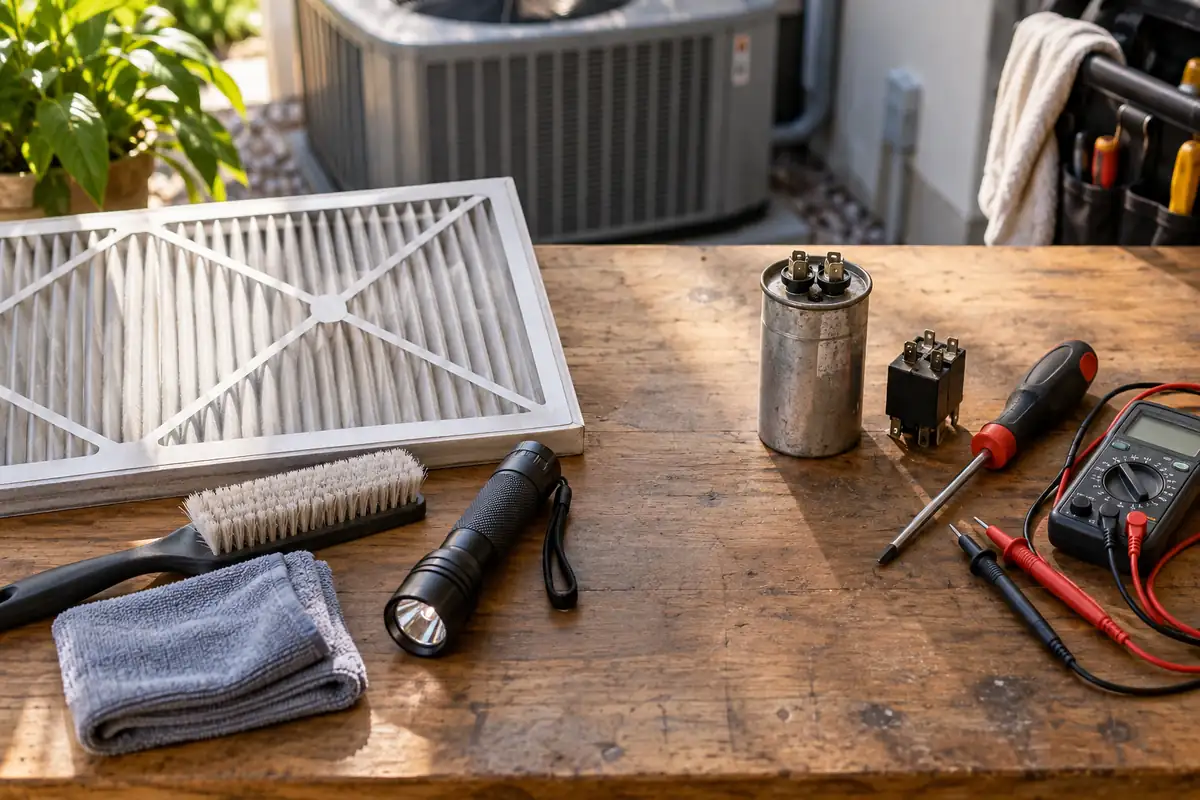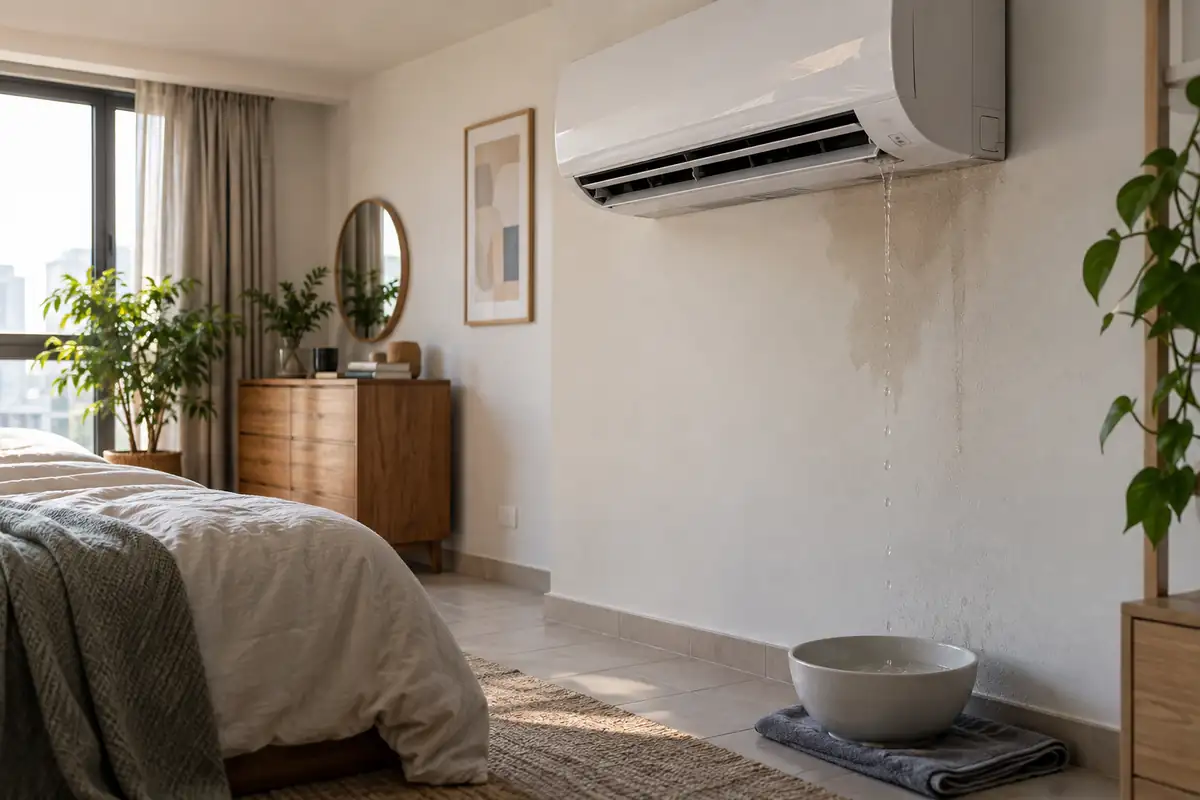


A small amount of condensation is normal inside an AC system. That water should normally leave through the drainage system. Water dripping into a room, onto a wall, ceiling, or floor should not be ignored.
The exact cause may require an inspection, but there are a few signs you can safely check first.
Quick Answer: Why Is My AC Leaking Water?
Common causes include:
- A blocked condensate drain line
- A dirty air filter
- A frozen evaporator coil
- Low refrigerant contributing to coil freezing
- A damaged or misaligned drain pan
- Poor drainage or poor installation
- A problem with the condensate pump, if one is used
- High moisture levels increase condensation
More than one issue can cause the same symptom. If the leak keeps returning, the cause should be identified rather than merely drying up the visible water.
What Should You Do First if Your AC Is Leaking Water?
Start with simple observations.
Check:
- Where the water first appears
- Whether the leak is active or occasional
- Whether the AC is still cooling normally
- Whether airflow feels weak
- Whether ice is visible around an accessible part of the unit
- Whether the filter looks is very dirty
- Whether the leak began after recent AC work
Move furniture or other items away from the wet area where practical. Do not touch electrical parts near water.
If water touches electrical equipment, or if a breaker trips, stop using the system. Then, get help right away.
Is It Normal for an AC to Produce Water?
Yes. An AC removes moisture from indoor air while cooling. That moisture condenses into water.
In a working system, that water should drain through the condensate drain line.
Water leaking into occupied areas of the home is different.
Watch for:
- Water below the indoor unit
- Damp ceilings or walls
- Water stains
- Peeling or bubbling paint
- Moisture that keeps returning
These signs may mean the water is not draining as intended.
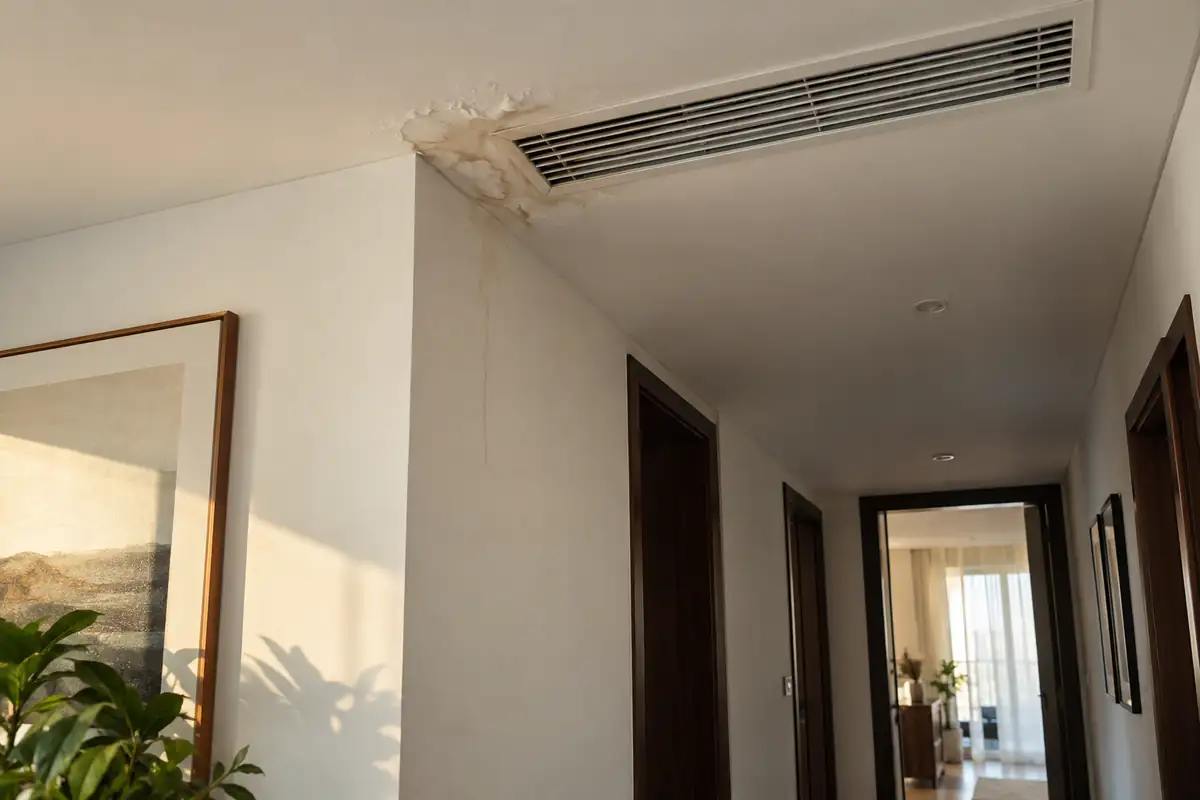
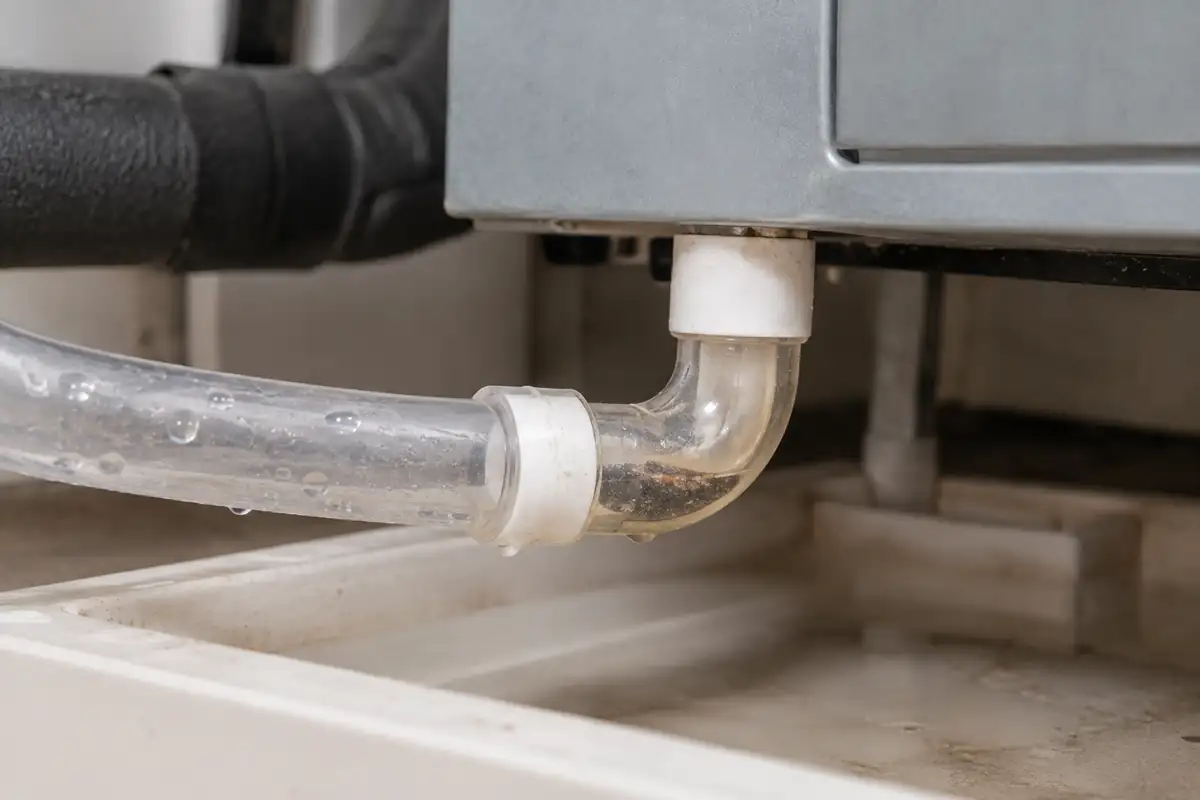
1. A Blocked Condensate Drain Line Can Cause Water to Back Up
The condensate drain carries water away from the indoor AC unit. If it becomes blocked, water may collect and overflow.
You may notice:
- Repeated dripping
- Water around the indoor unit
- Dampness close to the AC
- Wall or ceiling stains
A blocked drain is one possible cause, but it should not be assumed without checking the system. Avoid opening or flushing internal drainage parts unless you know the correct procedure for that AC setup.
2. A Dirty Air Filter Can Contribute to Freezing
A very dirty filter can restrict airflow.
Poor airflow may cause the evaporator coil to become too cold and freeze. When the ice later melts, water can appear around the indoor unit.
Related signs may include:
- Weak airflow
- Poor cooling
- Visible dirt on the filter
- Ice in any safely visible areas
A dirty filter does not explain every AC leak, but it can contribute to the problem.
3. A Frozen Evaporator Coil Can Lead to Water Leakage
A frozen coil can affect both airflow and cooling.
Possible signs include:
- Visible ice
- Weak airflow
- Poor cooling
- Water appearing as the ice melts
Freezing is a symptom, not the final diagnosis. Airflow problems, refrigerant issues, or other faults may be involved.
Repeated freezing should be investigated.
4. Low Refrigerant May Contribute to Coil Freezing
Low refrigerant can affect the cooling process and may contribute to coil freezing. When that ice melts, water may appear around the indoor unit. Poor cooling may also occur.
However, leaking water and weak cooling do not prove that the AC simply needs a refrigerant top-up.
The cause of low refrigerant levels should be diagnosed, and refrigerant service should be handled by an appropriate technician.
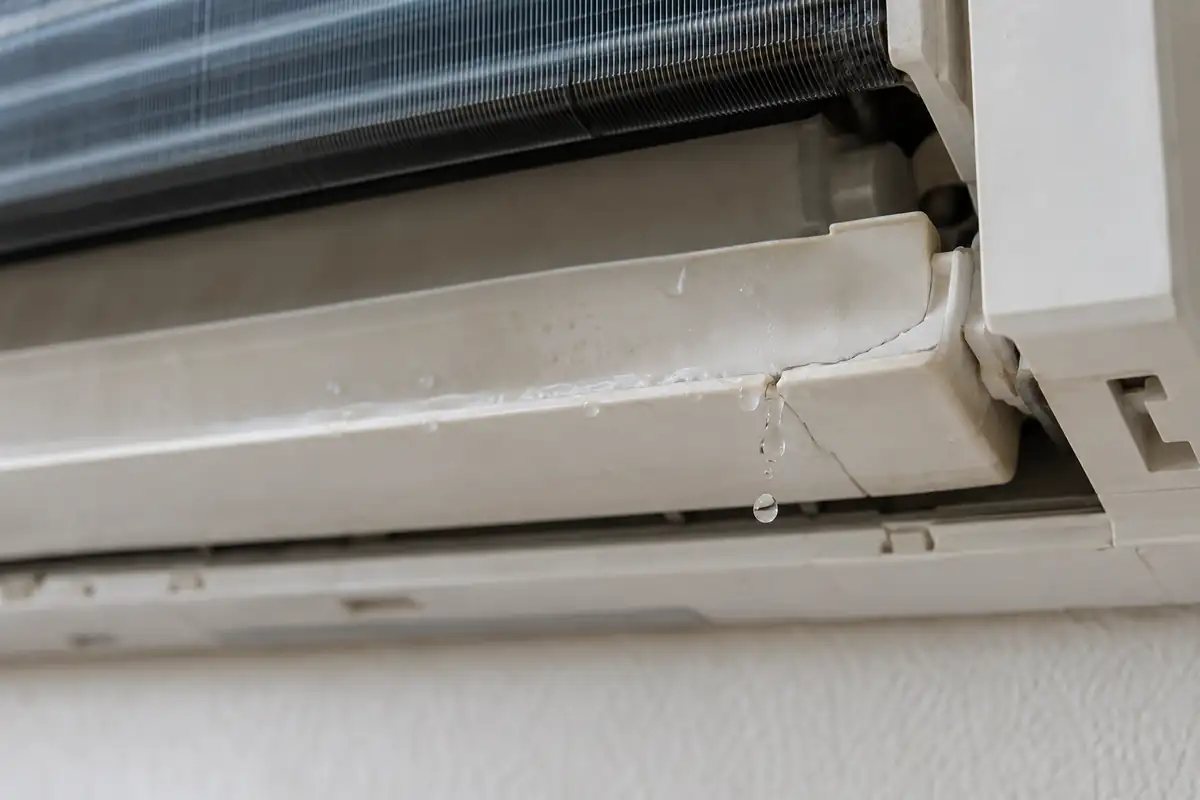
5. A Damaged or Misaligned Drain Pan May Let Water Escape
The drain pan helps collect condensation before it enters the drain.
If the pan is damaged, cracked, corroded, or out of position, water may escape instead.
Possible signs include:
- Water collecting below the unit
- Leakage from one side
- A leak that returns even when drainage appears to be working
The pan may need inspection to confirm the problem.
6. Poor Drainage or Installation Can Cause Repeated Leaks
Water must be able to move through the drainage system correctly.
A problem with the drain slope, connection, or unit position can affect that flow.
This may be more likely when:
- The leak began after installation
- The problem started after recent AC work
- The same leak returns after drainage work
- Water repeatedly collects in the same place
An inspection can help confirm the problem involves the installation or drainage.
7. A Condensate Pump Problem May Cause Leakage
Some AC systems use a pump to move condensate away.
If that pump fails, water may collect and overflow.
Not every AC setup uses a condensate pump, so this cause does not apply to every Dubai home.
Pump testing should not be treated as a basic DIY task.
8. High Humidity Can Increase Condensation
Higher moisture levels in the air can cause an AC to produce more condensation.
However, humidity alone does not explain why water is leaking into the room.
A working drainage system should still carry the water away.
If water continues to leak indoors, the AC and drainage system should be checked.
What Can You Safely Check Yourself?
Safe observations include:
- Thermostat settings
- Whether the filter looks dirty
- Visible ice
- Where the water appears
- Whether cooling has become weaker
- Whether the problem started after recent work
- Whether there is visible damage around the AC
Do not try to inspect or repair:
- Refrigerant lines
- Internal wiring
- Electrical panels
- Internal coils
- Condensate pumps
- Internal drain connections
Do not dismantle the AC to find the leak.
Can You Keep Using an AC That Is Leaking Water?
An active indoor leak should not simply be ignored. Continued leaking can affect:
- Walls
- Ceilings
- Paint
- Flooring
- Nearby fixtures
Water near electrical components is especially concerning.
If the leak is reaching components, breakers are tripping, there is unusual heat, or you notice a burning smell, stop using the affected equipment and seek a qualified electrician.
Even if the AC still cools, a leak that keeps returning should be inspected.
When Is an AC Water Leak More Urgent?
Give the problem immediate attention if you notice:
- Heavy or continuous leaking indoors
- Water near electrical parts
- A tripping breaker
- Smoke or a burning smell
- Unusual heat from electrical components
- Water spreading across a ceiling or wall
- Repeated ice formation
- A sudden major loss of cooling
Not every AC leak is an emergency.
The urgency depends on the amount of water, where it is going, and whether there are other signs of a safety issue.
When Should You Call an AC Technician?
A professional inspection may be useful when:
- The leak keeps returning
- You cannot identify where it starts
- Water is damaging walls or ceilings
- Cooling has also weakened
- Ice keeps forming
- An internal drainage problem may be involved
- Refrigerant loss may be involved
- The leak started after recent AC work
- Electrical warning signs appear
When requesting help, share:
- Property type
- Dubai area
- Which AC is affected
- Where the water appears
- Whether the AC is still cooling
- Whether ice is visible
- When the problem started
- Photos or videos if useful
- Any recent AC maintenance or repair
These details can make the issue easier to assess.
How Can You Reduce the Chance of Future AC Water Leaks?
Not every leak can be prevented, but early attention can help.
Watch for:
- Weak airflow
- Repeated coil freezing
- Visibly dirty filters
- Recurring drainage problems
- Changes in cooling
- Water appearing around the unit
Planned AC maintenance may help identify developing problems with airflow, drainage, or the system. It cannot guarantee that an AC will never leak.
Frequently Asked Questions
Why is my AC leaking water inside the house?
Possible causes are a blocked condensate drain, restricted airflow, or a frozen coil. Other possible causes include drain-pan problems, drainage issues, or another AC fault. You may need an inspection to find the exact cause.
Is it normal for an AC to drip water?
An AC normally creates condensation, but that water should be carried away through the drainage system. Water dripping into the room is not normal.
Can a dirty air filter cause AC water leakage?
A heavily clogged filter can reduce airflow and may contribute to coil freezing. When the ice melts, water can appear around the AC.
Why does my AC leak water after I turn it off?
If ice has formed on the coil, water may appear as the ice melts after the AC stops. A drainage issue may also be causing the leak.
Can I keep using my AC if it is leaking water?
Don't ignore water leaking indoors. If water is near electrical parts or poses other safety risks, stop using the AC immediately. Contact a qualified professional.
Can I fix an AC water leak myself?
You can check the filter, look for visible ice, and assess cooling performance. Also, note where the water is pooling. However, tasks involving internal drainage, electrical parts, refrigerant systems, coils, or pumps should be done by a qualified professional.
Is a leaking AC an emergency?
Not always. It’s urgent if the leak is severe, water is near electrical parts, damage is spreading, breakers trip, or there's another safety concern.
When should I call an AC technician?
Call for further inspection if: The leak keeps returning. The source of the leak is unclear. Cooling is poor. Ice forms repeatedly. Water damage is spreading. Internal AC components may be involved.
Need Help With an AC Water Leak?
If your AC is leaking water, share the property type, area in Dubai, affected unit, location of the leak, and any related cooling or electrical warning signs with RapidixHome.
This can help identify whether the AC may need inspection, maintenance, or repair.